

Main menu

  • Home
  • About
    • About CBM
    • Editorial Board
    • Announcement
  • Articles
    • Ahead of print
    • Current Issue
    • Archive
    • Collections
    • Cover Story
  • For Authors
    • Instructions for Authors
    • Resources
    • Submit a Manuscript
  • For Reviewers
    • Become a Reviewer
    • Instructions for Reviewers
    • Resources
    • Outstanding Reviewer
  • Subscription
  • Alerts
    • Email Alerts
    • RSS Feeds
    • Table of Contents
  • Contact us
  • Other Publications
    • cbm

User menu

  • My alerts

Search

  • Advanced search
Cancer Biology & Medicine
  • Other Publications
    • cbm
  • My alerts
Cancer Biology & Medicine

Advanced Search


  • Home
  • About
    • About CBM
    • Editorial Board
    • Announcement
  • Articles
    • Ahead of print
    • Current Issue
    • Archive
    • Collections
    • Cover Story
  • For Authors
    • Instructions for Authors
    • Resources
    • Submit a Manuscript
  • For Reviewers
    • Become a Reviewer
    • Instructions for Reviewers
    • Resources
    • Outstanding Reviewer
  • Subscription
  • Alerts
    • Email Alerts
    • RSS Feeds
    • Table of Contents
  • Contact us
  • Follow cbm on Twitter
  • Visit cbm on Facebook
Research ArticleResearch Article

Resveratrol Induces Apoptosis in Human Osteosarcoma MG63 Cells

Yan Liu, Xin Wang, Yuxin Xie, Jingui Zhang, Qingshan Wang and Xianhui Xu
Chinese Journal of Clinical Oncology October 2008, 5 (5) 361-366; DOI: https://doi.org/10.1007/s11805-008-0361-3
Yan Liu
1Institute of Hematology, Chinese Academy of Medical Sciences, Tianjin 300020, China.
  • Find this author on Google Scholar
  • Find this author on PubMed
  • Search for this author on this site
Xin Wang
2The Second Hospital of Hebei Medical University, Shijiazhuang 050017, Hebei Province, China.
  • Find this author on Google Scholar
  • Find this author on PubMed
  • Search for this author on this site
Yuxin Xie
3The Third Hospital of Hebei Medical University, Shijiazhuang 050017, Hebei Province, China.
  • Find this author on Google Scholar
  • Find this author on PubMed
  • Search for this author on this site
  • For correspondence: liuyanly10{at}163.com
Jingui Zhang
3The Third Hospital of Hebei Medical University, Shijiazhuang 050017, Hebei Province, China.
  • Find this author on Google Scholar
  • Find this author on PubMed
  • Search for this author on this site
Qingshan Wang
4Department of Physiology, Hebei Medical University, Shijiazhuang 050017, Hebei Province, China.
  • Find this author on Google Scholar
  • Find this author on PubMed
  • Search for this author on this site
Xianhui Xu
1Institute of Hematology, Chinese Academy of Medical Sciences, Tianjin 300020, China.
  • Find this author on Google Scholar
  • Find this author on PubMed
  • Search for this author on this site
  • Article
  • Figures & Data
  • Info & Metrics
  • References
  • PDF
Loading

Article Figures & Data

Figures

  • Tables
  • Fig.1.
    • Download figure
    • Open in new tab
    • Download powerpoint
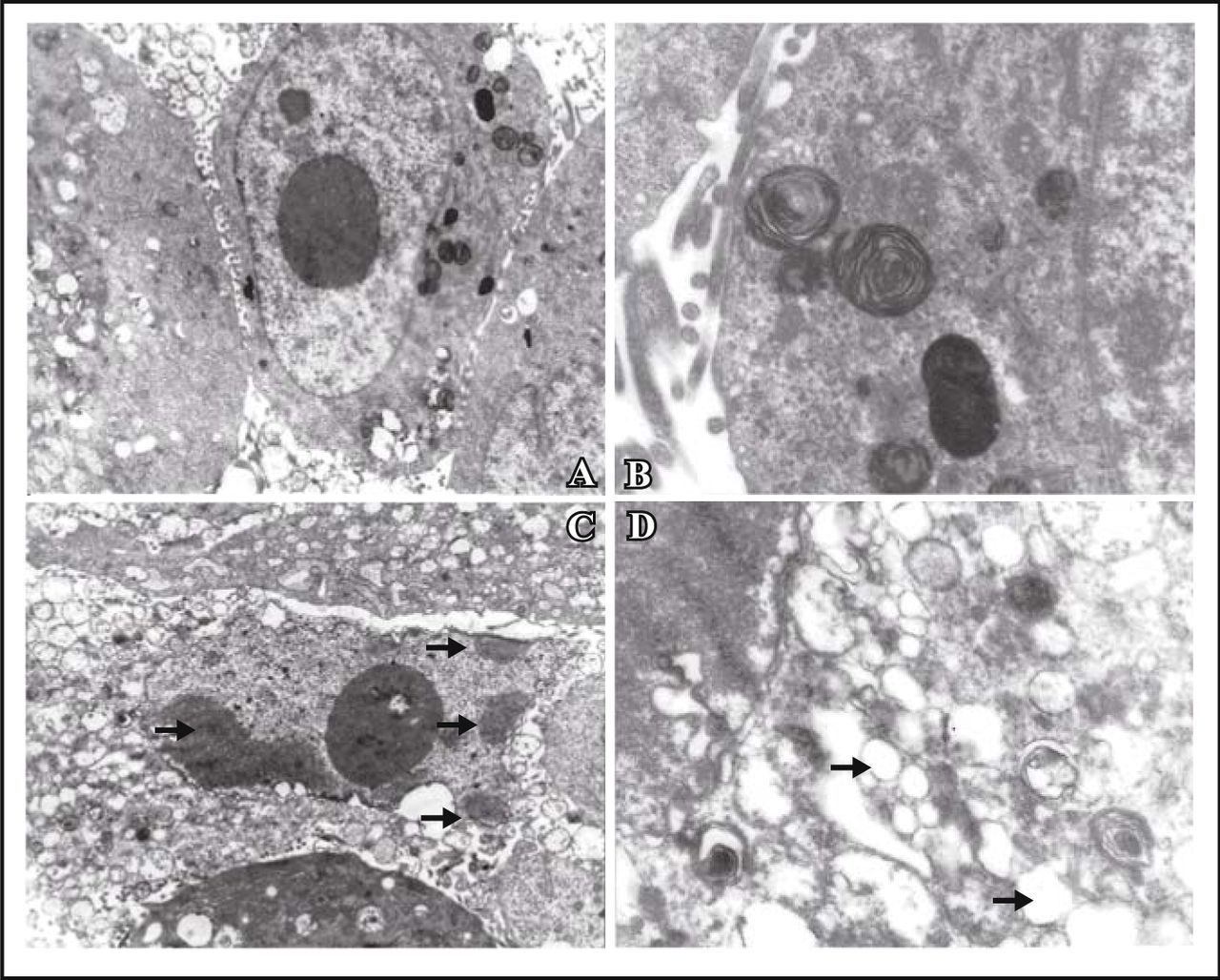
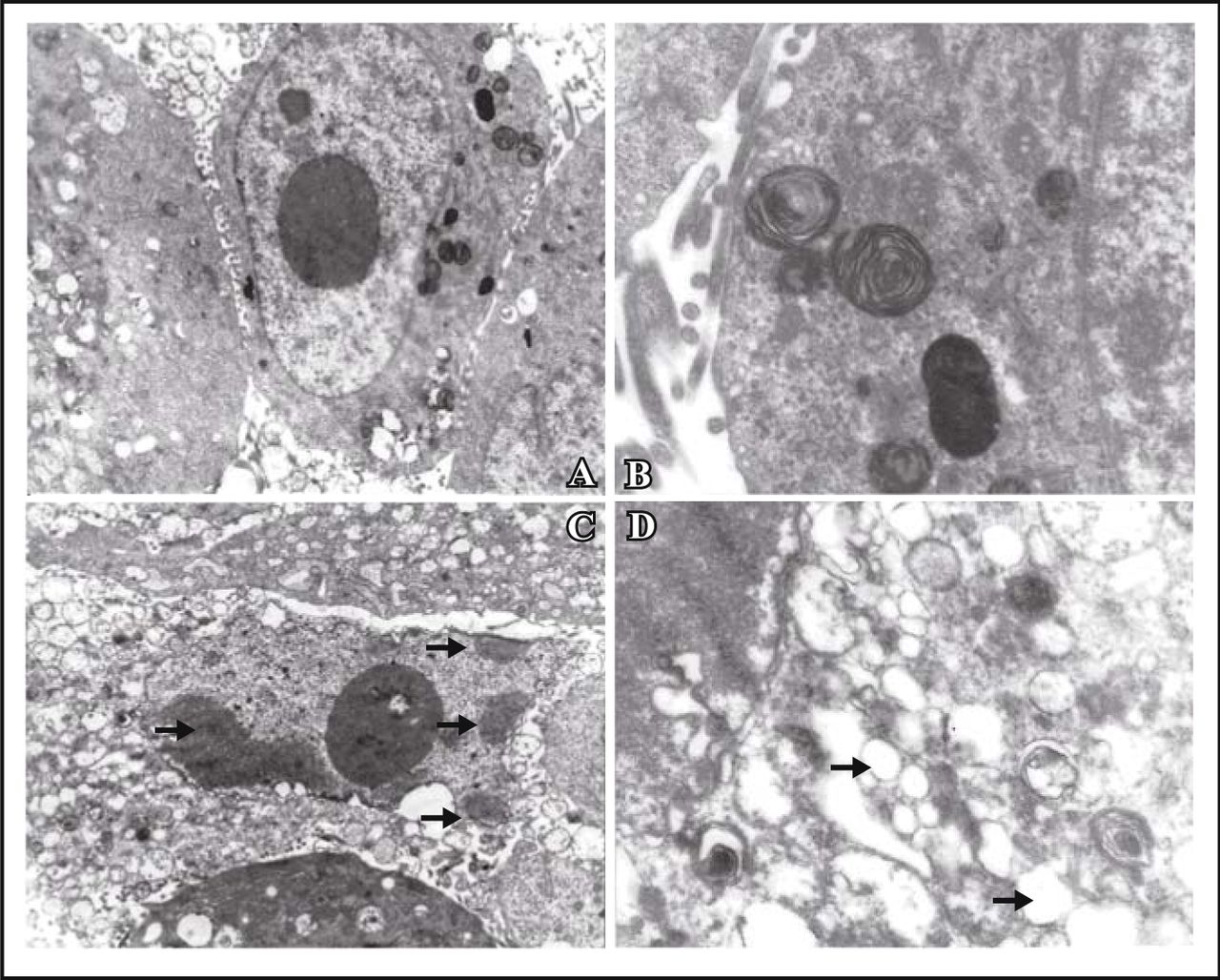
    Fig.1. Morphological observation by transmission electron microscopy in MG63 cells treated with 20 mg/L of resveratrol for 72 h.

    MG63 cells showed apoptotic morphological changes of the chromatin such as being condensed and marginated (as showed by arrows in C ); There were lots of vacuolus in the cytoplasm (as shown by arrows in D). A, control cells × 4,000; B, control cells × 15,000; C, treated with resveratrol × 4,000; D, treated with resveratrol × 15,000.

  • Fig.2.
    • Download figure
    • Open in new tab
    • Download powerpoint
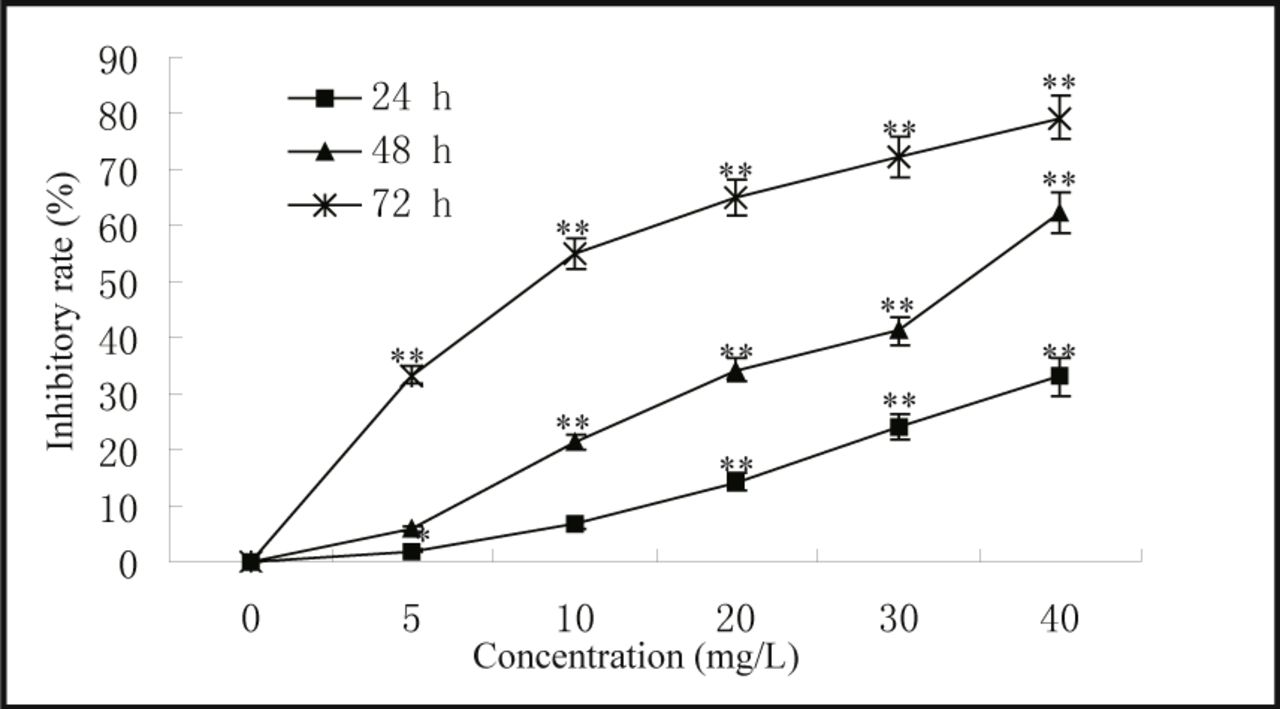
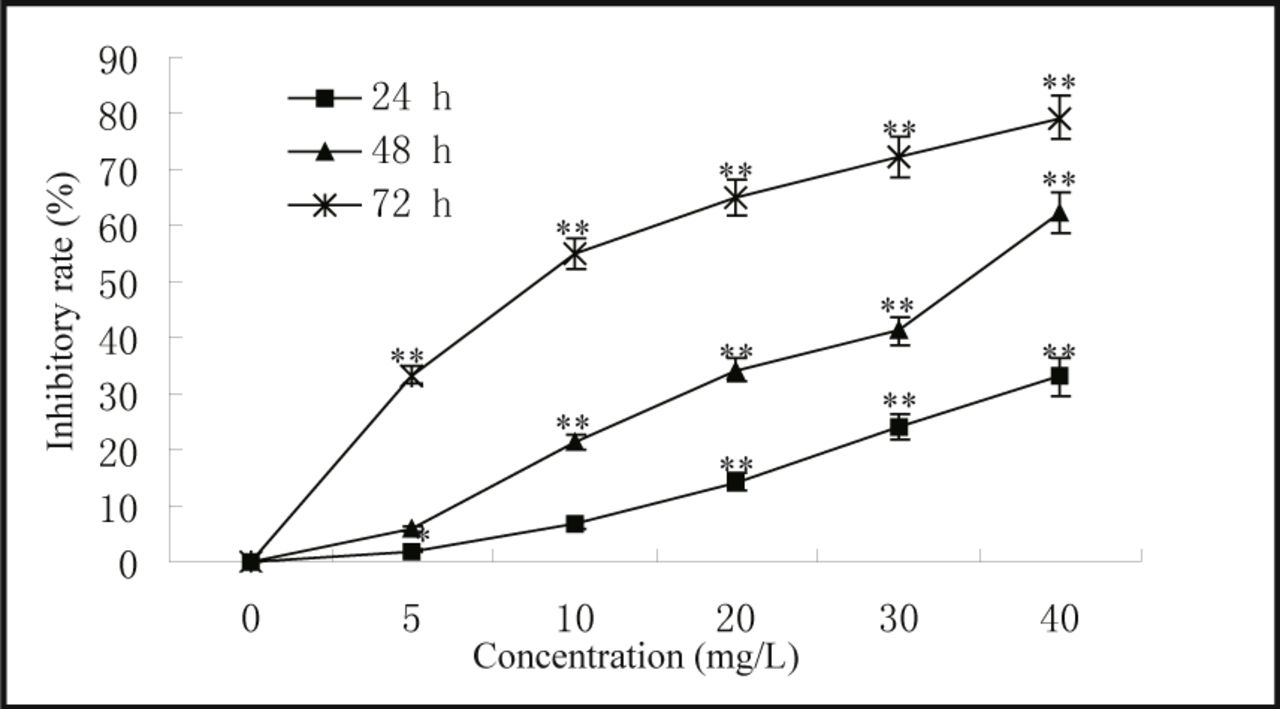
    Fig.2. Effect of resveratrol on growth inhibition in MG63 cell.

    Embedded Image; n = 3; *, P < 0.05, **, P < 0.01; compared with control group.

  • Fig.3.
    • Download figure
    • Open in new tab
    • Download powerpoint
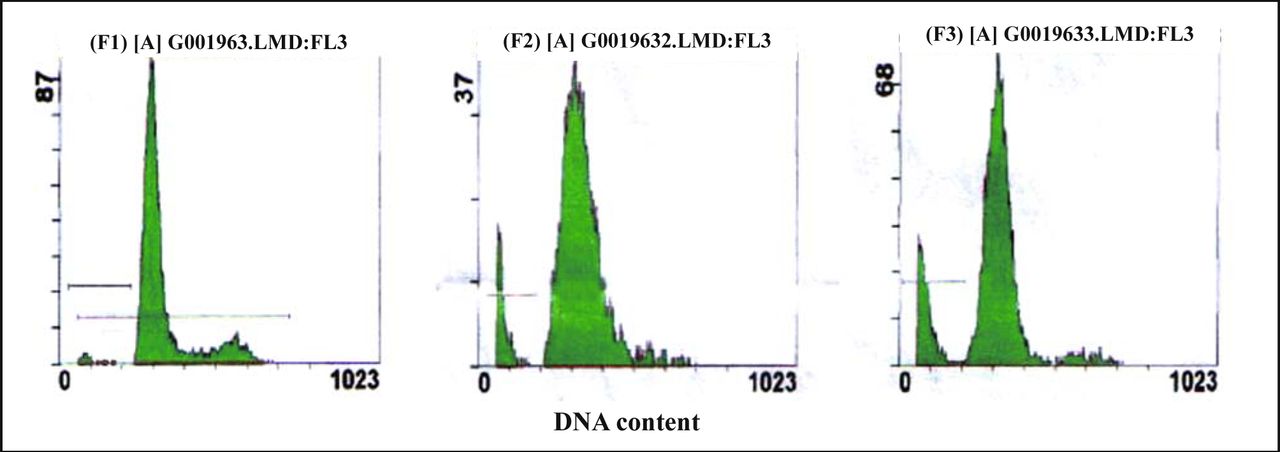
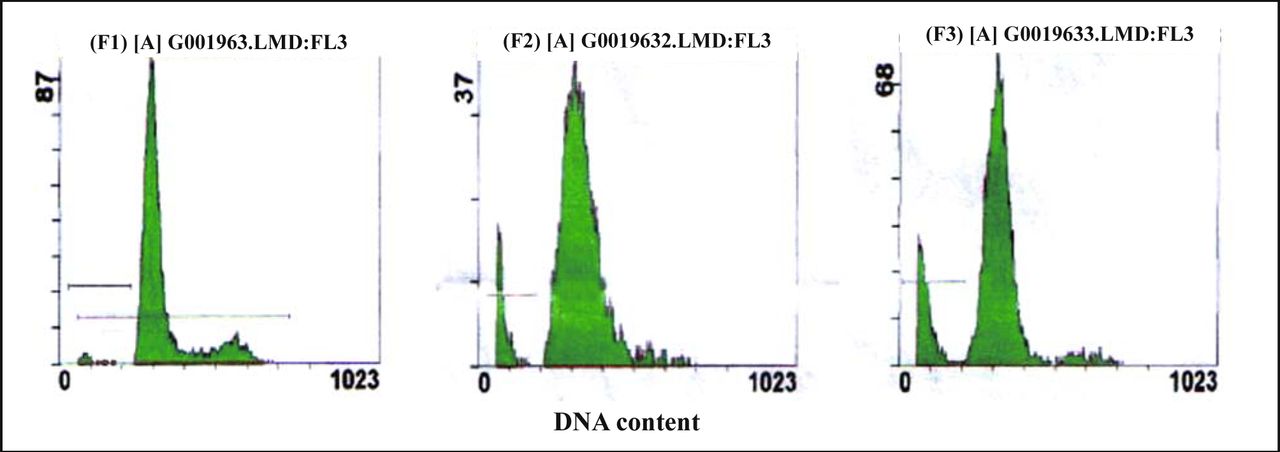
    Fig.3. Apoptotic rate of MG63 detected by flow cytometry.

    A, control cells; B&C, cells treated with resveratrol (10 or 20 mg/L) for 72 h, respectively. A sub-diploid peak was found before the G0/G1trasition, which was a typical apoptotic cell peak.

  • Fig.4.
    • Download figure
    • Open in new tab
    • Download powerpoint
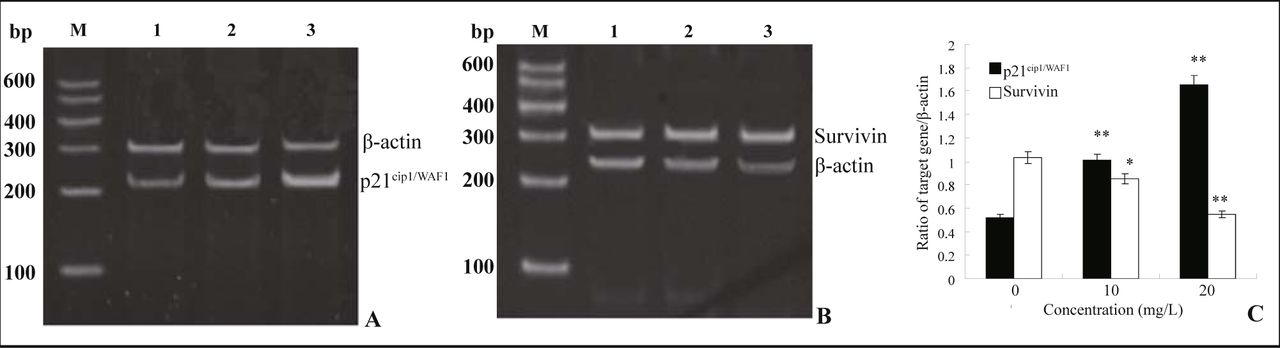
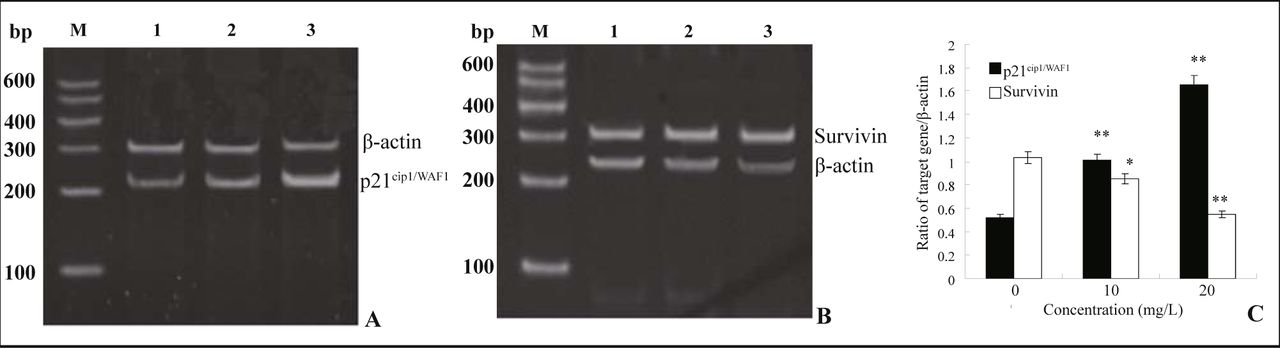
    Fig.4. Analysis of the p21cip1/WAF1 and survivin mRNA expression in MG63 cells after treatmeat with resveratrol for 72 h.

    A and B show the mRNA expression of p21cip1/WAF1 and survivin respectively. Lane M, DNA marker; Lane 1, control cells; Lane 2, 10 mg/L resveratrol; Lane 3, 20 mg/L resveratrol. C shows the average of semi-quantitative amounts of p21cip1/WAF1 and survivin mRNA respectively. mRNA expression is presented as a ratio to internal standard. x ± s, n = 3, *P < 0.05, **P < 0.01, compared with control cells.
Tables

  • Figures
    • View popup
    Table 1.

    Effect of resveratrol on cell cycle parameters and apoptosis.

    Concentration
    (mg/L)
    Apoptosis rates
    (%)
    Cell cycle (%)
    G0/G1SG2/M
    04.85 ± 0.2170.7 ± 1.7020.8 ± 1.238.5 ± 0.69
    1011.90 ± 0.63**75.5 ± 1.25*16.5 ± 0.817.0 ± 0.84
    2019.74 ± 0.88**83.4 ± 1.21*10.7 ± 0.984.6 ± 1.03
    • Embedded Image; n = 3;

    • ↵* P < 0.05;

    • ↵** P < 0.01; compared with control group.

    • View popup
    Table 2.

    Effects of resveratrol on the expression of p21cip1/WAF1 and survivin.

    Concentration (mg/L)Fluorescence index
    Survivinp21cip1/WAF1
    01.00 ± 0.021.00 ± 0.01
    100.94 ± 0.041.09 ± 0.03*
    200.90 ± 0.06*1.74 ± 0.06**
    • Embedded Image; n = 3;

    • ↵* P < 0.05;

    • ↵** P < 0.01; compared with control group.

PreviousNext
Back to top

In this issue

Cancer Biology and Medicine: 5 (5)
Chinese Journal of Clinical Oncology
Vol. 5, Issue 5
1 Oct 2008
  • Table of Contents
  • Index by author
Print
Download PDF
Email Article

Thank you for your interest in spreading the word on Cancer Biology & Medicine.

NOTE: We only request your email address so that the person you are recommending the page to knows that you wanted them to see it, and that it is not junk mail. We do not capture any email address.

Enter multiple addresses on separate lines or separate them with commas.
Resveratrol Induces Apoptosis in Human Osteosarcoma MG63 Cells
(Your Name) has sent you a message from Cancer Biology & Medicine
(Your Name) thought you would like to see the Cancer Biology & Medicine web site.
Citation Tools
Resveratrol Induces Apoptosis in Human Osteosarcoma MG63 Cells
Yan Liu, Xin Wang, Yuxin Xie, Jingui Zhang, Qingshan Wang, Xianhui Xu
Chinese Journal of Clinical Oncology Oct 2008, 5 (5) 361-366; DOI: 10.1007/s11805-008-0361-3

Citation Manager Formats

  • BibTeX
  • Bookends
  • EasyBib
  • EndNote (tagged)
  • EndNote 8 (xml)
  • Medlars
  • Mendeley
  • Papers
  • RefWorks Tagged
  • Ref Manager
  • RIS
  • Zotero
Share
Resveratrol Induces Apoptosis in Human Osteosarcoma MG63 Cells
Yan Liu, Xin Wang, Yuxin Xie, Jingui Zhang, Qingshan Wang, Xianhui Xu
Chinese Journal of Clinical Oncology Oct 2008, 5 (5) 361-366; DOI: 10.1007/s11805-008-0361-3
Twitter logo Facebook logo Mendeley logo
  • Tweet Widget
  • Facebook Like
  • Google Plus One

Jump to section

  • Article
    • Abstract
    • Introduction
    • Materials and Methods
    • Results
    • Discussion
    • References
  • Figures & Data
  • Info & Metrics
  • References
  • PDF

Related Articles

  • No related articles found.
  • Google Scholar

Cited By...

  • No citing articles found.
  • Google Scholar

More in this TOC Section

  • Changing Paradigms in Clinical Oncology Research — Highlights from the 2011 ASCO Annual Meeting and Beyond
  • B7-H4 Expression and Increased Death Risk of Cancer Patients: A Meta-Analysis
  • Efficacy and Immune Mechanisms of Cetuximab for the Treatment of Metastatic Colorectal Cancer
Show more Research Article

Similar Articles

Keywords

  • resveratrol
  • MG63
  • cell apoptosis
  • survivin
  • p21cip1/WAF1

Navigate

  • Home
  • Current Issue

More Information

  • About CBM
  • About CACA
  • About TMUCIH
  • Editorial Board
  • Subscription

For Authors

  • Instructions for authors
  • Journal Policies
  • Submit a Manuscript

Journal Services

  • Email Alerts
  • Facebook
  • RSS Feeds
  • Twitter


© 2026 Cancer Biology & Medicine

Powered by HighWire